
Bridgeport is the birthplace of five Chicago mayors, the home of the Chicago White Sox, and one of Chicago’s original ethnic working-class neighborhoods. But that’s only the beginning of Bridgeport’s story.
A settler named Charles Lee or Leigh came from Virginia and settled along the south fork of the Chicago River by 1804, but soon moved nearer to Lake Michigan after Fort Dearborn was completed. In April 1812, two of his tenants escaped to Fort Dearborn, when visiting Winnebago proved unfriendly and massacred others at the trading post. The are remained uninhibited as hostilities rose and remained mostly vacant until the U.S. Army rebuilt Fort Dearborn in 1816.
Soon after, John Crafts rebuilt the trading post attracting new settlers into the area. After the Civil War, Bridgeport residents, looked beyond their neighborhood and exercised important roles in municipal government. In 1836, the area was renamed Bridgeport, the first Chicago neighborhood during the decade when a large numbers of immigrants from Ireland started settling in this working-class neighborhood, which became an Irish-American enclave.
Today the close-knit neighborhood is experiencing a renaissance of sorts. Early on, immigrants of all nationalities moved to the area to work on construction of the Illinois and Michigan Canal along the Chicago River.
Now developers are flocking to the area to convert older warehouses and manufacturing plants into loft homes that appeal to buyers discovering the area for its affordability and proximity to downtown.
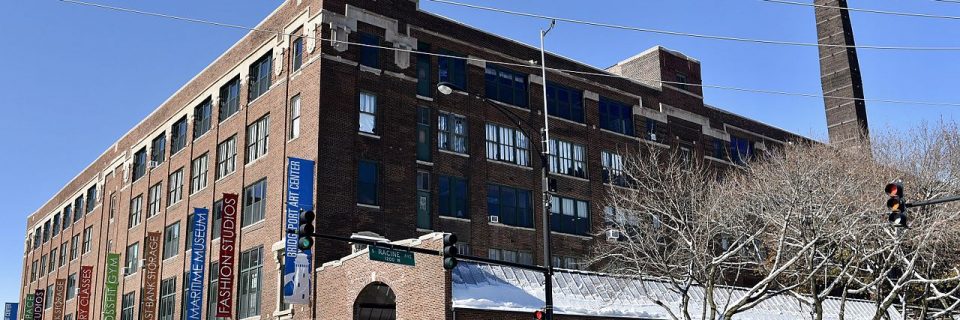
The area has a thriving arts community as well. The Bridgeport Museum of Modern Art, the Version and Select Media art festivals are found here along with the Bridgeport Art Center and Zhou B Art Center. The Chicago Sun-Times identified Bridgeport as among the four most varied neighborhoods in the city, together with West Ridge, Albany Park and Rogers Park.
Bridgeport has been the home or birthplace of five mayors of Chicago, representing all but 10 years between 1933 and 2011, illustrating the neighborhood’s influence on Chicago politics for most of the 20th century.
The area is accessed by the CTA’s Red Line which lies just to the east.
