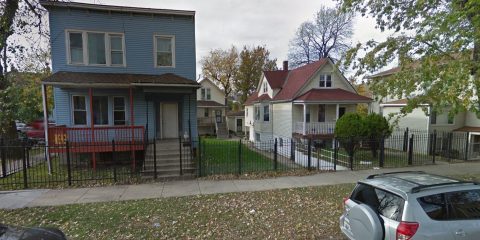
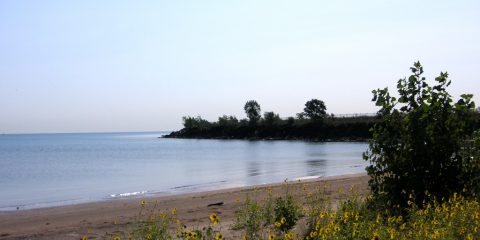
The first settlers arrived in the 1850s. In 1883, Adolph Hegewisch, who headed the U.S. Rolling Stock Company, planned a model town beside a railroad. However, a fund shortage prevented its fulfillment, and the community fell far short of the projected number.
Farmers were the first settlers in the area currently known as Riverdale, in the 1837 which was previously known as Wildwood, north of the bend at the Calumet River.
The first settlers, in the Kensington area, which was was West Pullman was originally called, were farmers who arrived in the 1850s. By the 1880s, additional settlers arrived in the neighborhood who catered to the farmers.
Dominated by the Calumet River, the neighborhood of East Side, received its name from the river that sits on the east bank. Due to the vicinity to the lake and the railroads, industrial expansion expanded into the neighborhood, in the 1870s.
Primarily an industrial neighborhood, there is a small group of residences in the northeast corner with approx 80% of the area being zoned as industrial, natural wetlands, or parks. The rest of the neighborhood, is for residential and commercial uses.
Pullman encompasses a much wider area than its two historic areas (the older historic area is often referred to as “Pullman” and is a Chicago Landmark district and a National Monument, as well as the northern annex historic area which is usually referred to as North Pullman.
Roseland was first settled in 1849, when Dutch migrants took residence along the road not far from Lake Calumet. They called the area “de Hooge Prairie”, the High Prairie, because it was built on higher, drier ground than the earlier Dutch settlement several miles further south of the Little Calumet River, which was called “de Laage Prairie”, the Low Prairie, which is now modern day South Holland.
After the New York, Chicago & St. Louis railroad constructed rail yards in 1881 and a quarry was opened, settlement began in Calumet Heights. It became a part of the Village of Hyde Park shortly thereafter in 1889, then soon annexed by the City of Chicago.
The Burnside area is also called “The Triangle”, by locals as it is bordered by railroad tracks on every side.
South Chicago (formerly known as Ainsworth) started as a series of scattered Native American settlements prior to turning into a village. They used the area as well as the Calumet River for portages.
Avalon Park began as Johnathon Pierce began to develop the area under the name “Pierce’s Park” in 1888. The Avalon Park Community Church (founded in 1896) led an effort to change the name of the area, and in 1910 the name was changed to Avalon Park.
The Chatham neighborhood was first settled by farmers in the 1860s. Industrialization began in the 1860s, following the establishment of the Cornell Watch Factory. The subdivision of a portion of the neighborhood in the 1880s was the beginning of population growth.
Southeast Neighborhodhoods